


Komandos
-
Posts
673 -
Joined
-
Last visited
-
Days Won
14
Recent Profile Visitors



-
As an alternative to the "automatic battle", it does not look bad. It resembles the mechanics of the game "Heroes of Magic and Sword". There are immortal heroes in this game who participate in the battle, but cannot be killed in battle. And there are troops who are suffering losses. Only immortal heroes can raise the level of development and accumulate experience.
-
Stress and fatigue
.jpg.08faa1e98860a5effd9937923e215c89.jpg)
-
The stress mechanism is able to work (appear) as a valuable resource in the game, only when the aliens use massive attacks (raids). In these cases, the player needs to maintain an army of several tactical groups so that the soldiers do not lose combat capability after several battles in a row. Tactical groups also need to create a sleep and rest regime. So that the tactical group, which spent a day on combat duty, could not fight effectively after the end of the work shift. All this requires the creation of a full-fledged army structure for the player's army (similar to how it exists in the Warhammer game)
-
Stress, overwork, on the contrary, make a soldier less attentive and more indifferent to danger. The stress indicator should reduce reaction speed, accuracy, endurance, strength and health. On the contrary, courage increases with severe fatigue. If you have ever cared for wild animals, you should know that if wild animals lose their fear and wild animals stop being afraid, then this is a sign that the animal is weak and sick. A dying animal is completely indifferent to any danger.
-

Milestone 2 Air Battles
Komandos replied to Vitruviansquid's topic in Xenonauts-2 General Discussion
If the game is based on logic, then the player should have time and opportunity (pause) to think about it. If reflexes and reaction speed are required from the player, then the game cannot be called logical. -
Larval infestation should offer dilema
Komandos replied to gG-Unknown's topic in Xenonauts-2 General Discussion
The ability to heal soldiers (after infecting with maggots) will make the game less dramatic. Previously, the aliens had almost no weapons that were guaranteed to kill xenonauts with one blow, and now the aliens will not have such weapons at all. The aliens become weaker and less scary on the battlefield. -
There are simply not enough events in the game that require the player to react (action). I would advise giving the player more money so that the player can look less into the void on the monitor screen, waiting for a new event. The player should take more part in the construction of bases. The lack of micro-management makes the game empty and boring in those moments when the player has to wait for the next UFO appearance or a new task. For example: if in the game "HMM:3" remove from the strategic map all the bonuses and resources that the player can collect by exploring the world around him, then the game instantly becomes boring and empty for the entire period, which is while he is waiting for the completion of the construction of his city (castle). Because there are no events happening at the moment. The player is just waiting for the accumulation of sufficient resources to enable new construction.
-
Will Xenonauts 2 come out in 2024?
Komandos replied to Gulskjegg's topic in Xenonauts-2 General Discussion
The game as it exists in 2023: - you can already play in 2023. It exists in the public domain. The game in the form in which it will be in a while: - it will be possible to play only after a while. -
Footprints in the snow should not disappear at all, only during heavy snowfall or blizzard.
-
Regarding "Endgame" and new developments.
Komandos replied to 453074's topic in Xenonauts-2 General Discussion
Instead of displaying progress using %%, you can change the color of regions on the planet map. Alien activity (panic) can be displayed in a similar way
-
Soldier equipment... and its cost!
Komandos replied to 453074's topic in Xenonauts-2 General Discussion
I also remember my first fight in UFO:1 where several (2-3) surviving aliens completely killed my entire team of 14 soldiers. In Xenonauts 1, I had battles in which my soldiers completely destroyed themselves on their own. (Friendly fire, suppression, a grenade thrown at oneself and comrades' feet). Also in the game Xenonauts 1 there were very poor settings: the range of visibility, the range of weapons, which forced them to play very slowly and walk in dense crowds, exposing soldiers to the risk of being killed by "friendly fire". As a result: I continue to play the game with my own settings. As a result: the battles in Xenonauts 1 were difficult only because they forced the player to use boring tactics, and the greatest threat was not the aliens, but the player's own soldiers. -
Soldier equipment... and its cost!
Komandos replied to 453074's topic in Xenonauts-2 General Discussion
The game does not provide an option that aliens defeat the player on the battlefield. Or the option that the aliens are defeating the player due to the faster development of technology. There is an option in the game that the aliens defeat the player only economically. (The player's victory or defeat depends on the effectiveness of economic management.) For me, a more interesting option is when a player loses because he has incorrectly prioritized research. (The player made a mistake in choosing the direction for research, as a result of which he lost a lot of time). It is better to limit access to alien technologies in the following way: if the player arrives on a combat mission later than a few hours, and also: if the combat mission lasts more than a given number of moves (rounds), then the aliens manage to destroy their most important technologies. As a result: without important alien technologies, the player's scientific progress slows down. -
Milestone 2 Air Battles
Komandos replied to Vitruviansquid's topic in Xenonauts-2 General Discussion
Battles in the sky can be done on the same principle as battles in the game "Mortal Kombat". Each aircraft has its own set of techniques (which depends on the design of the aircraft and the skill of the pilots). The outcome of the battle depends on how the player correctly assesses the situation (the distance to the enemy, the reaction time and time the execution of the "tactical technique".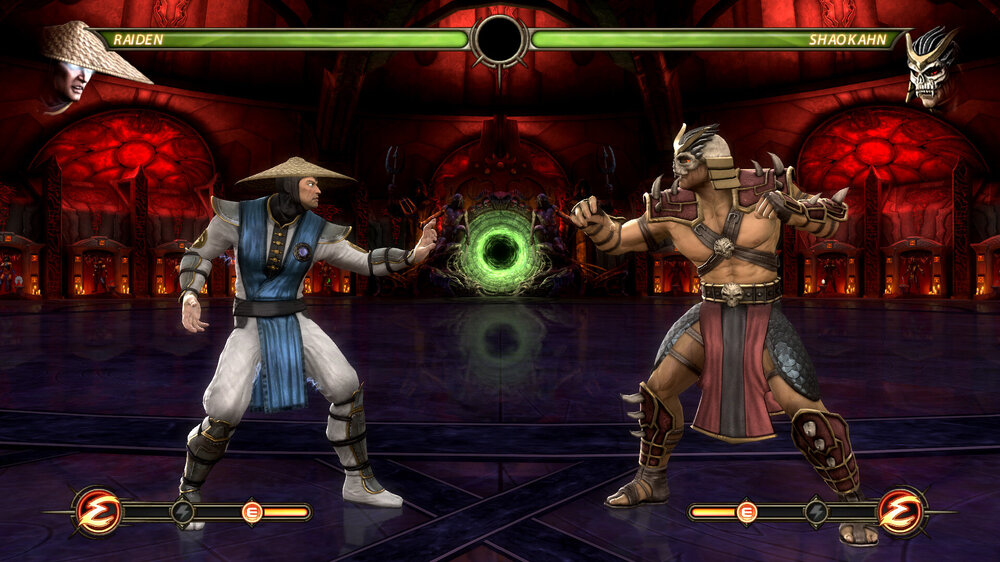
-
Milestone 2 Air Battles
Komandos replied to Vitruviansquid's topic in Xenonauts-2 General Discussion
In aerial combat, players do not have the opportunity to gain an advantage over the enemy in any other way except to upgrade weapons and aircraft. There are no pilot skills. There are no weather conditions. No wind, no sun, no altitude. There is nothing that gives airplanes a situational bonus. -
Milestone 2 Air Battles
Komandos replied to Vitruviansquid's topic in Xenonauts-2 General Discussion
I like the idea of adding the ability to hang additional fuel tanks or reconnaissance equipment on the plane instead of weapons.